
Dear Colleen,
Just to give you some background information about this project.
The nationally endangered South-eastern Black Cockatoo feeds almost exclusively on the seeds of Brown Stringybark, Desert Stringybark and Buloke. The ongoing decline in quality and quantity of food resources has been identified as a major threat to the cockatoo.
[fusion_builder_container hundred_percent=”yes” overflow=”visible”][fusion_builder_row][fusion_builder_column type=”1_1″ background_position=”left top” background_color=”” border_size=”” border_color=”” border_style=”solid” spacing=”yes” background_image=”” background_repeat=”no-repeat” padding=”” margin_top=”0px” margin_bottom=”0px” class=”” id=”” animation_type=”” animation_speed=”0.3″ animation_direction=”left” hide_on_mobile=”no” center_content=”no” min_height=”none”]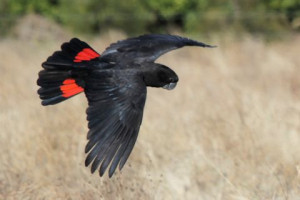
The South-eastern Red-tailed Black cockatoos and Stringybark Habitat Project (run through Zoos SA) has focused on working with private landholders. Its aim is to protect existing remnant patches and paddock trees of Stringybark to encourage regeneration and to revegetate feeding habitat for a viable long term food resource for the cockies.
Local business, Eucaleuca Native Services run by Ralph and Helen Scheel have been supplying quality tube-stock for the project since its inception in 2009 and with support from local landholders over 20,000 trees have been planted.
[/fusion_builder_column][fusion_builder_column type=”1_1″ background_position=”left top” background_color=”” border_size=”” border_color=”” border_style=”solid” spacing=”yes” background_image=”” background_repeat=”no-repeat” padding=”” margin_top=”0px” margin_bottom=”0px” class=”” id=”” animation_type=”” animation_speed=”0.3″ animation_direction=”left” hide_on_mobile=”no” center_content=”no” min_height=”none”]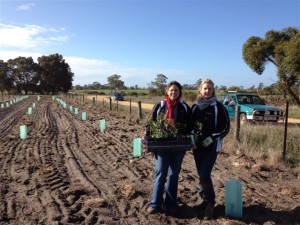
This year G.J. Gardner have assisted the project by funding Eucaleuca Native Services to grow 300 trees for landholders participating in the project. G.J. Gardner Naracoorte, Managing Director Meg Dohse and Linda Sagasser also spent the morning assisting a local landholder at Naracoorte to plant out their stringybark tube-stock.
Our thanks go to G.J. Gardner for participating in the project and helping to secure food into the future for our South-eastern Red-tailed Black Cockatoo.
Kerry Gilks (Project Manager).
Thank you to Meg Dohse and the team at G.J. Gardner Naracoorte for the 300 plants for this project. All up G.J. Gardner SA and WA are helping to plant 1300 trees across the 2 states.
Slainte – Colleen
[/fusion_builder_column][/fusion_builder_row][/fusion_builder_container]

