
Dear Subscribers for the Planet,
As we come to our End of Year Report, we want to send you a heartfelt thank you.
This year, with your support we were able to distribute over 5,000 trees to 9 community groups in VIC, NSW, WA and QLD. Please take a moment to read about your impact and to read about the wonderful people out there who are doing so much for their patch of the earth.
Collectively, you are contributing to the restoration of our Australian ecosystems. Thank you to each and every subscriber for your generous on-going support.
Colleen Filippa | Founding Director | Fifteen Trees
Here’s a list of our wonderful subscribers (84) …
Mik Aidt, Deborah Bourke, Dana Bretag, Sandra Briody, Jenn Clark, Andrea Hurley, Jacob Johnston, Sean Keniry, Jill Clarke & Paul Duggan, Rosalind Read, Annabel Ritchie, Rosie Hunt, Lynn Teale, Mary Wade, Lorena Wootton, Rae Knowler, Bette Schwarz, Caitlyn Jordan, Sonja Meyer, Georgina Imberger, Carole Felmy, Fiona Leahy & Antony Swingler, Christopher Hawkins, James Hosking, Marian Turner, Nyree Windsor, Glenys Grigg, Lucy Bracey, Sarah Hart, Fiona Baxter, Eliza-Jane Gilchrist, Corinna Klupiec, Jess Tatham-Thompson, Helen Charlesworth, Sean Werth, Martine Stoll, Bronwen James, Sharon Chan, David & Karen Dawson, Michael Nicols, Julie Atkinson, Natasha Ludowyk, Belinda Coates, Joanna Cosgriff, Andrew Griffiths, Jen Askham, Anthony & Catherine Clifford, Samantha Little, Marji Puotinen, Gerri Savage, Matthew Stevens, Susan & Darryl Murray, Ellen Burns, Sara Melvin, Helen Browitt, Fern Hames, Daniel Cocking, Cait Larcombe, Swell Magazine, Anthony (AJ) Sleeman, Erin Lee, Sam Munday, Suzannah Morrison, Moria Finucane, Carla Bergen, Sue Giles, Helen Pritchard, Ian Heriot, Natalie Marshall, Liz McLean, Chloe Bond, Liz Stephen, Heidi Fog, Catherine Wilson, Frances, Urthly Organics, Richard Finlay-Jones, LSW Lawyers, Jan Souter, Amy Stapleton and Julia Zemiro.
Planting sites 2025 (in order of planting timeline)
- Tully, QLD | 350 trees
- Millewa, VIC | 750 trees
- Mt Worth, VIC | 1,000 trees
- Portland, VIC | 200 trees
- Grassflat, VIC | 1,180 trees
- Hunter Valley, NSW | 100 trees
- Perth, WA | 200 trees
- Western Port Bay, VIC | 700 trees
- The Daintree Rainforest, QLD | 560 trees
Site 1 | Tully, QLD | 350 trees
Recently, 350 native trees were planted in a lowland tropical forest environment at Tully on the Cassowary Coast, QLD thanks to our subscribers. This is traditional land of the Gulgnay People. The trees were planted as part of a revegetation project in a community park at Tully, along a manmade creek that flows onto the Great Barrier Reef.

These trees will:
- improve water quality in the creek,
- reduce invasive weeds and limit fire risk across the site,
- provide sanctuary and food sources for native wildlife and
- extend and enhance a longer corridor for animals to safely travel.
Over 30 different native species of trees and shrubs were planted. They included: Blue Quandongs, Queensland Maples, Blue Gingers, Dianella, Black Beans, Cordylines, Flame Trees, Figs, Glochidons, Ulysses Butterfly Trees, Umbrella Trees and a large variety of Acacias/wattles.
Site 2 | Millewa, VIC | 750 trees
The trees were planted on both private and public land within the Millewa Area of northwest Victoria, including Johansen Reserve, Cullulleraine. Twelve volunteers planted out the native trees and shrubs which included species of acacia, eucalyptus and melaleuca.

These trees will enhance existing wildlife corridors which link small pockets of native vegetation.
Thank you for the opportunity to care and provide for our environment, this native revegetation will be a head start and help assist with the natural rejuvenation of our local flora.
Annette Lambert | Facilitator | Millewa-Carwarp Landcare Group
Site 3 | Mt Worth, VIC | 1,000 trees
The trees were planted by Mt Worth Landcare in the Gippsland district of Victoria. The trees were a mixture of Dogwoods, Bergens, Prickly Tea-trees, Lemon Bottle, Green Bottle and Swamp Gum. All indigenous to the district. The trees were used as infill among existing reserves. All trees were planted with tree guards to help protect the new seedlings from grazers such as wombats.

Site 4 | Portland, VIC | 200 trees

Native birds in the areas include; Welcome Shallow, Red Wattlebird, New Holland Honeyeater, Silvereye, Striated Thornbill plus various seabirds. Animals such as the Swamp Wallaby and Swamp Rat visit the area.

Site 5 | GrassFlat, VIC | 1,180 trees
Grass Flat is a district in the Wimmera of Western Victoria and is home to some truly beautiful and unique Australian wildlife such as wallabies, kangaroos, echidnas, birds of prey, honeyeaters, Blue-wrens, reptiles, native bees and butterflies including the endangered Goldern-rayed Blue Butterfly). It is here that we planted 5,000 native trees, shrubs and grasses of which 1,000 were paid for my our Subscribers for the Planet. This indigenous revegetation is being undertaken at this site by Natimuk Urban Landcare Group to restore habitat for local wildlife and pollinators.

Some of the indigenous plants that went into the ground included; wattles (Gold Dust, Mealy, Black, Golden and Nealie), Bulokes, Drooping Sheoaks, Silver Banksias, Scarlet Bottlebrushes, Giant Hop Bush and eucalyptus (Black Box, Yellow Gum, Kamarooka Mallee).
These indigenous plants will also provide other ecosystem services such as slowing water flow to the fresh water and naturally saline wetland/lake system on the property, improving water quality and reducing topsoil loss. Plants will also serve as a future seed source of indigenous species for other revegetation projects.

Site 6 | Hunter Valley, NSW | 100 trees
Some of the species of trees planted at the site included; Wattles (Snowy River, Silver, Green and Blackwood), Hakeas, She-Oaks and Gums (Black, Red Spotted, Yellow Box, Black Sally and Ribbon), Bottlebrushes (Riber, Scarlet, Lemon and Crimson) and Tea trees.
The trees were planted at Morpeth Common in the Hunter Valley of NSW, to help improve the natural beauty and give access to the area to local residents. These trees will also create a green space to enhance the health of the existing ‘dry rainforest’ by increasing the biodiversity of the area with the new plantings as well as reduce evaporation, algae blooms and improve soils.
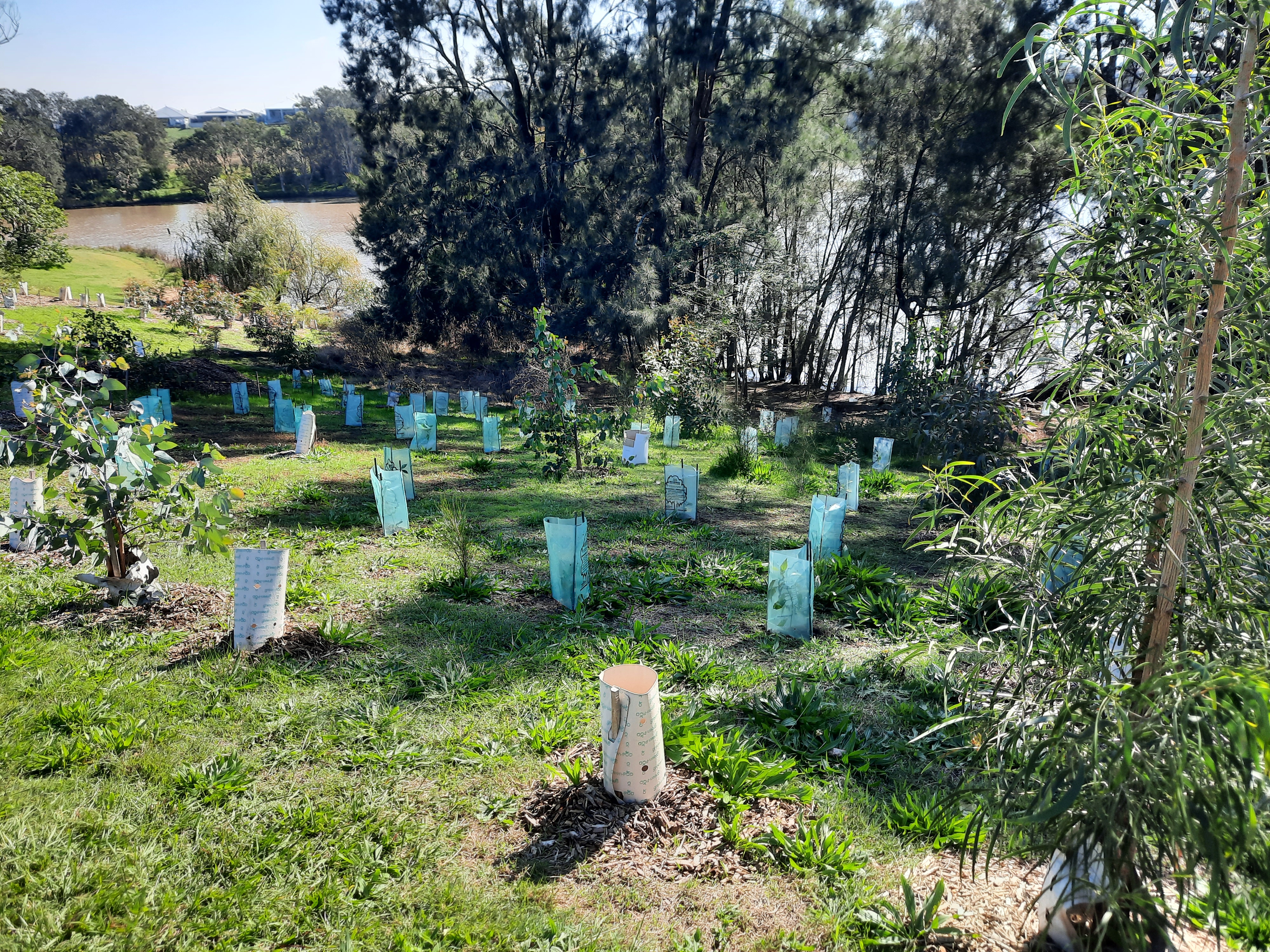
The area is bound by a stretch of lagoon and wetland on the northern side, and a gully on the southern side. The trees planted were a mixture of rainforest species specially chosen for the site, including wattles (Maidens, Silver), bottlebrushes, Casuarinas, Lomandras, Paperbarks, Tea-trees, Eucalyptus and Moreton Bay Figs. Rainforest birds such as Satin bower birds, fig birds, Koels, Night Herons, Spoonbils and Channel billed cuckoos frequent the Common.
Site 7 | Perth, WA | 200 trees
Kaarakin Black Cockatoo Conservation Centre at Martin, WA is a great organisation to support. Kaarakin is situated on a 41-acre bushland site, that was a former wildlife park. The site was once extremely degraded. The Kaarakin team have spent many years revegetating it back towards its former biodiversity rich state. Kaarakin are focusing on replanting to create wildlife corridors for small species of mammals, reptiles and birds to safely travel through and back into the regional park adjacent (Banyowla Regional Park). Kaarakin rescue wild black cockatoos in distress (due to injury from cars, cats, ravens and other birds) and release them back into the wild once they are healthy and well.

On Saturday July 26th, 10 volunteers from the organisation rolled up to plant out the 500 trees. This was a great opportunity for volunteers who often do not see each other as they assist at the centre on different days of the week. A variety of large and mid-story cockatoo foraging plants were planted. This included trees such as Marri and Jarrah, a variety of Hakeas and Bull Banksia and Ashby’s Banksia.

Kaarakin is in the foothills of the Darling Scarp, the last spot for black cockatoos within the Jarrah Marri forest to stop for a feed before entering the urban areas. These plantings help connect the centre’s 41acre bushland site to the surrounding regional park, reducing habitat fragmentation by providing wildlife corridors.
Kaarakin would like to thank supporters of Fifteen Trees for the continued support. Allowing us to infill our once degraded 41 acres and turn it into a safe wildlife corridor in the surrounding regional park. The sheer number of species that have returned since we starting revegetating is mind-blowing and amazing to witness.
We are already seeing the site provide food for all three of our endemic and threatened black cockatoos as well as the return of several small bird species such as Red Capped and Scarlet Robins, Western Spinebills and Yellow Rumped Thornbills.
Sam Clarke | Animal Management Officer | Kaarakin
All three of the local endemic threatened black cockatoos visit this site to feed. They are Baudins, Carnabys and Forest red-tailed black cockatoos. The site is also frequented by some more common marsupials such as bandicoots and brush tailed possums.
Site 8 | Western Port Bay | 700 trees
The trees were planted as part of the Western Port Koala Corridor Project at Pearcedale in City of Casey, VIC. Bunurong country. This region is part of the Western Port Biosphere Reserve, of which is the only Biosphere Reserve in Victoria. The area is very flat and has been used for fruit growing and market gardens over the years. The dominant species across this landscape are Tee Tree, Eucalypts and Wattles, however the region is extremely fragmented by heavy farming practices and urban growth. Many areas have undergone flooding and Eucalypts along creek lines are dead or dying. The soil in this region is very sandy and dry with many rabbits present.
Big thanks to Subscribers for the Planet for helping us grow the Western Port Koala Corridor!
Every tree planted brings us one step closer to a safer, greener future for koalas. Your help in funding this project is very much appreciatedKelly Smith | President | Western Port Biosphere Foundation
In the interests of biodiversity, over 50 different species of native plants were planted. These plants were a mixture of large trees, tall shrubs, groundcovers, and grasses. All sourced from Peninsula Bushworks, an indigenous plant nursery on the Mornington Peninsula. Species included, Eucalyptus (River Red Gum, Silver Stringybark, Swamp Gum, Snow Gum and Manna Gum), Acacia (Black Wattle, Blackwood and Coastal Wattle), Sheokes, Coastal Tea-tree, Scented Paperbark, Banksia, Hakea, Kangaroo Apple and grasses (Tall Sedge, Wallaby Grass, Austral Rush, Weeping Grass and Tussock Grass.

These trees will help to link up existing bushland where koalas live and or move through the landscape and aiding in an increase of their genetic diversity. The trees will also provide habitat for other wildlife and help to improve soil quality on and around private properties. More trees in the landscape will help stop erosion and soil runoff and improve the waterways entering the wetlands of the Western Port Bay (Ramsar listed).
The area that the group are focusing on are also home to kangaroos, wallabies, echidnas and many species of birds. We are particularly focussed on creating habitat for the Threatened Powerful Owl and the Endangered Southern Brown Bandicoot. Both species, as well as the others mentioned, use these corridors to travel through the landscape. It is essential that corridors are created to limit islands of isolated bushland where species can become locally extinct because of lack of genetic diversity.
Site 9 | The Daintree, QLD | 560 trees
The site (Newell, QLD | Nulu Country) was originally overburden with weeds. By replacing the weeds with forest, the land will now provide habitat to the huge variety of local wildlife that live in the Daintree Rainforest. The planting included indigenous tree species including Figs, Eucalypts, Melaleucas, Acacias, Red Cedar, Brown Silky Oak, Brown Pine and Golden Penda.

The site is located in the Lower Daintree Rainforest of Tropical Far North Queensland, with a waterway which feeds directly into the Great Barrier Reef. The site where the revegetation work is being conducted is part of a large farm area which was previously cleared for cane and cattle farming; however, the area is very low lying and is not suitable for hooved animal farming. The landowners have chosen to return this area of the property back to authentic rainforest, compete with State Government protection, which has been included to the title deeds of the property ensuring protection for perpetuity.
We are eternally grateful to Fifteen Trees and their Subscribers for the Planet for supporting our revegetation work. Without this ongoing support, we cannot continue to do what we do – expanding habitat and improving the environment and supporting our unique local wildlife.
Connie Pinson | Partner and Founder | Daintree Life
Numerous bird species have been observed and taking advantage of the revegetation. These species include, but are not limited to: Yellow-bellied Sunbirds, Greater Egrets, Willie wagtails, Rainbow Bee-eaters, multiple species of Kingfishers and Masked Lapwings. Graceful tree frogs and Rocket frogs are regularly sighted within the planting areas. There is lots of evidence of Bandicoot diggings between trees and on the edges. A Water Python has been sighted in the revegetation area. Numerous species of butterflies and dragonflies have been observed within the area. In the future as trees attain additional height and begin flowering and fruiting, the entire area will provide a valuable food resource for Spectacled Flying-foxes which are a federally listed endangered species.
A heartfelt thank you to all our ‘Subscribers for the Planet’. And if you have a friend who might be interested in joining, please send along this link for more information.
Need to update an existing subscription? No worries. You can make your changes here.
Writer: Colleen B. Filippa
With a background in Environmental Science, Colleen is the Founding Director of Fifteen Trees. In 2009, after 20 years in primary, secondary and tertiary education institutions, Colleen left the classroom to start the company. Fifteen Trees is a social enterprise assisting individuals and companies to reduce their carbon footprint by supporting community groups such as Landcare, schools and environmental networks.


