
Trees for individuals are adding up as kind-hearted souls are purchasing trees for us to plant on their behalf. Trees to cover their flights, trees to cover their cars and trees as birthday gifts and in memory of a loved one.

Over the course of the year, we will be updating this blog as more people purchase trees and more trees are planted.
Trees planted in loving memory.
- Heart felt sympathy from Colleen and Albert to the family of Melissa May-Richards on the loss of their mother, daughter, sister and niece (15 trees).
- Trees for Andy for Father’s Day (15 trees).
- Trees for Lynn Ann Wedley’s mother Jo Ann (15 trees).
- Trees planted in memory for Sandy Raeburn’s mother Elsie May Mountjoy, warmest sympathy from Colleen and Albert (15 trees).
Thank you to those who purchased 1 tree.
- Sonia Bain
- Jaiveer Singh
- Dorothy
- Anne Denham
- Indiana Atkins
Thank you to those who purchased 2 trees.
- Genevieve Novak
- Zan Zaidi
- St Aloysius College, North Melbourne.
Thank you to those who purchased 3 trees.
- Bai Yang Hill. ‘Three trees for Bai Yang. What grows faster – Pie, Money or Trees?‘
- Alexander Pritchard
- See-mun Soo. ‘Bless every kind soul involved‘.
Thank you to those who purchased 4 trees.
- Donna & Peter Guille. ‘Dear Lyn, It’s a little late, but here is the remainder of your birthday gift. Love Donna and Peter’.
Thank you to those who purchased 5 trees.
- Alana B. Tranter
- Katie White
- Hannah Hayman, trees for a 50th birthday
- Ann for Domenica Hoare. ‘Happy Christmas Dom. Keep on planting and saving Australia’s remarkable trees’.
Thank you to those who purchased 6 trees.
- Alexander Pritchard
- SRK. ‘We have planted trees for each family to mark a special moment in our marriage journey. Like a strong relationship, trees grow deeper roots with time. They weather life’s changes, stand tall through the seasons, and keep reaching upward. These trees are more than just symbols of our journey, family, and cherished friendships – they’ll also help offset the carbon footprint of our celebration, giving back to the planet while offering shade, beauty, and life for years to come’.
- Blanka Dudas, trees in memory of Susan Wilms.
Thank you to those who purchased 8 trees.
- Katie White
Thank you to those who purchased 10 trees.
- Kathy Murdoch
- Enrich
- Tom Butterworth
- Alana Elliott. ‘Happy Birthday Harry. I love you’.
- Simon Goodrich. ‘Dear Elissa. Happy Birthday. Love Sharon, Simon, Bella and Ruby‘.
- Peter Hill. ‘Happy Planet. Happy Fathers Day. From all of us’.
- Lena Mazza
- Tan Phat Bui. ‘Happy Birthday Christopher Ewing. I love you’.
- Maria Dangerfield. ‘For my mum’.
- Peter McLean,
- Matt Halford.
Thank you to those who purchased 15 trees.
- Enrich
- Hannah Mai
- Elissa Goodrich
- Matt Halford
- Helen Winter. In celebration of the birth of her first grandchild Spencer.
- Alex Heath
- Shannon Haintz
- Bev McGain
- Upinder Sidhu
- Sylviana Ifani, who wanted 5 trees planted on the behalf of her late mother Ernawaty, her father Nirfan and herself.
- Parmjit Sidgu
- Tan Phan
- David Goode
- Elissa Goodrich, purchased these trees for Anne and Ron.
- David Noble
- Petra Stirling.
Thank you to those who purchased 20 trees.
- Jan Souter
- Sue Martin
- Yusik Yusif who wanted 5 trees planted for late mother Salma Radhin, late sister Nuva, father Maresfin Rusin and for themself.
Thank you to those who purchased 30 trees.
- Alexander Pritchard
- Jenny Kan and Thomas Nurse
Thank you to those who purchased 36 trees.
- Katie White
Thank you to those who purchased 54 trees.
- Katie White
Thank you to those who purchased 75 trees.
- Trees were planted for for Sharon Bell. ‘Happy Birthday Sharon, from all the Gundog Estate family’.
Trees Planted for Lesley & Paul’s 70th Birthday Celebrations.
- Chris & Elizabeth Astley
- David Demeye
- Lorraine Brown
- Glenda Mason
- Dorothy Taylor
- Lynton Ruddick
- Nyssa Barrett
- Ellen O’Shannassy
- Sandy David
- Noemi McKinnon
- Lynden Walker
- Lynette Turner
Thank you to our family and friends who helped us celebrate our birthdays. We didn’t need any gifts, so thought the idea of buying native trees to help our stressed environment would be a more sustainable gift.
We attained a total of 74 trees, 21 were planted at Common Ground at Freshwater Creek, and 53 in the Grampians.
A wonderful result. Individuals can make a difference when we work together. Remember this idea, as something you can do yourselves.
Thank you again – Lesley & Paul.
Trees planted to celebrate Jacqui’s retirement.
Jacqui has been a dedicated nurse for 39 years, hence the request from her colleagues for a tree planted for each year of her service. ‘Jacqui has been a fervent protector of old growth forests and we feel this gift will reflect her sentiments perfectly‘. (39 trees).

Site A | Freshwater Creek, VIC | 145 trees planted
The site for these trees was at Common Ground Farm at Freshwater Creek, located on the traditional land of the Wadawurrung/Wathaurong people of the Kulin Nation. The farm is a core business stream in this social enterprise. As a community farm, they run volunteer programs which are very popular among locals, plus workshops and school programs on a variety of food-growing related topics.

The farm’s mission is to create;
- a vibrant and biodiverse space,
- provide an example of regenerative farming and
- allow for community driven food production.
Common Ground Farm believes that people need locally adapted models as an example of what is possible. The trees planted at the farm will provide food and shelter for pollinators. This incorporates biodiversity and supportive planting techniques to create a diverse and integrative system.

Fifty (50) students and 3 teachers from Camberwell Grammar School joined the Common Ground Farm for a tree planting day. The Year 7 students used the day as an introduction to sustainable food systems and to learn how community can participate in landscape restoration.
Some of the species planted included; Bellarine Yellow Gum, Blackwood, Black Wattle, Golden Wattle, River Bottlebrush, Drooping Sheoak, River Sheoak, Hop Goodenia, White Correa and three types of native grasses – Wallaby, Kangaroo and Spear.
The area was historically a seasonal floodplain and wooded grassland. Through land clearing and overgrazing it is now an exposed, invasive-dominated grassland. This planting looks to restore diversity in species, habitat and structure to the local ecosystem. Over time, the trees will provide shelter for wildlife that relies on mid and understory vegetation, reduce wind and evaporation, and contribute to restoring soil health and ecology by assisting with flood or drought mitigation.

The farm is home to many native animals, birds, insects and organisms that support the healthy function of a natural ecosystem. The health of the biodiversity of the land extends beyond just the fence-line.Eastern Grey Kangaroos, Echidnas, Bandicoots, Tiger Snakes, Wedgetail Eagles, Black Kites, Nankeen Kestrels, Black Ducks and Wood Ducks all call this district home.
Site B | Campaspe Valley, VIC | 400 trees planted
The trees were planted in a fenced off area along a creek line, along with many aquatic plants to help stabilise the creek beds. This project supports the wildlife corridor between Black hill & Green Hill. This large landscape project is coordinated by Bio-Link Alliance Organisation. This particular project also includes fencing off the large old trees (lone paddock trees) in the middle of paddocks to let nature take over with the exclusion of grazing farm animal pressure. Read more about these lone paddock trees in one of our recent blogposts here.

May thanks to your generous supporter to help us get trees in the ground here in the beautiful Campaspe Valley of Central Victoria. The Edgecombe Group planted these trees through your assistance. The trees came from A&B Trees in Heathcote and were in great condition when we got them. The availability of the trees was both timely and greatly appreciated.
Graham Connell | Landcare Member | Campaspe Valley Landcare
Site C | Bellingen Island, NSW | 155 trees
The trees were planted at Bellingen Island, NSW (Gumbaynggirr Country) by Bellinger Landcare members over the course of a few weeks. The flying fox population at Bellingen Island is a nationally recognised site. It is mostly occupied by Grey headed Flying Foxes (nationally threatened), while Black Flying Foxes and Little Red Flying foxes have also been recorded at the camp. The area is also home to Koalas, Quolls, Greater Gliders, and Glossy Black Cockatoos.

This particular site was selected to provide multiple benefits, such as:
- increase forage and roost sites for Grey Headed Flying Foxes,
- Improve health of the site,
- reduce erosion and
- improve connectivity between fragmented flora reserves.
The dominant vegetation immediately around planting sites is Lowland Subtropical Rainforest and Wet Sclerophyll Forest, but much of this has been cleared for farmland in the past.

These trees will improve the availability of winter forage for Grey Headed Flying Foxes. These flying foxes are a keystone species in the Australian landscape and provide critical pollination and seed dispersal services. Although they have a varied diet, the availability of nectar in late winter and early spring restricts population growth. By improving the availability of this forage, Bellinger Landcare Group are helping to ease that stress on the flying foxes. The trees will also provide multi-species benefit to other mammals, birds and insects of the area, and help with erosion control and flood mitigation.
Thank you to the generous sponsors of these trees. By sponsoring this project, you have helped Bellinger Landcare’s efforts to provide increased forage for our beloved local flying fox populations.
Andrew Yager | Project Manager | Bellinger Landcare Inc.
Site D | Grampians/Gariwerd, VIC | 53 trees
The trees were planted at Grampians/Gariwerd District of Western Victoria, by the Buloke and Northern Grampians Landcare Network (BNGLN). In brief, this network supports 18 local Landcare and environmental groups across the Shires of Buloke and Northern Grampians. Restoration efforts aim to return the region as closely as possible to its original ecological vegetation state.

The landscape, once densely forested, has suffered from waves of deforestation due to mining (1860s), timber harvesting (1920s), agriculture (1930s) and of course bushfires.
Grampians contained more than 30% of the state’s flora with dozens of endemic species, which means they do not grow anywhere else. It is truly amazing when you think about it. It’s a relatively small area to contain that much representation of the state’s flora.
This small rural district is one of the biodiversity hotspots in Victoria, with majestic tree species such as box, ironbark, River Red Gums, Victorian Blue Gum and the iconic Buloke tree (which Red-tailed Cockatoos rely on for food).
Jill Burness | Gariwerd/Grampians Endemic Botanic Gardens
In December 2024, dry lightning ignited multiple fires across the Grampians. By the end of the summer, more than 135,000 hectares of National Park and farmland had been burned. Since then, BNGLN and Parks Victoria, are playing a vital role in several restoration projects in the district. One of the planting sites lies on a former Buloke woodland, a critically endangered habitat that once supported species like the Red-tailed Black Cockatoo, which relies on Buloke seed pods for food. The tree, known for its extremely hard wood and slow growth (up to 100 years to mature), was historically used for firewood and fencing.
Parks Victoria has commenced large-scale recovery efforts, and local Landcare groups such as the Buloke and Northern Grampians Landcare Network (BNGLN) are playing a vital role in environmental restoration. Recovery efforts include:
- Supporting natural regeneration of native plants, many of which are fire-adapted
- Managing soil erosion and minimising land disturbance
- Maintaining water quality in local rivers, creeks, and streams
- Controlling invasive species that threaten native flora
- Assisting native wildlife with nesting boxes and the control of feral predators
- Replanting in sensitive areas
- Establishing long-term recovery strategies, including monitoring and community involvement.
When groups get together on an environmental project, wonderful things happen that benefit every living thing on this planet!
Andrew Borg | President | BNGLN
The Grampians/Gerward District is home to the majestic flora of box and ironbark eucalyptus, River Red Gum and Victorian blue gum species. The continued expansion of habitat corridors and revegetation projects like this one will help support the long-term recovery of this precious landscape.
Site E | Milford, TAS | 39 trees
The trees were planted at Milford, TAS on the traditional lands of the Tyerrernotepanner People who lived in the vicinity of Campbelltown. The tribe of 60–80 people, followed a seasonal cycle of foraging in North Oyster Bay in winter, conducting kangaroo hunts around Campbell Town in spring, and collecting and trading ochre in the Western Tiers in the summer months.
On a sunny but cold morning in spring, nine (9) people attended the planting day. Volunteers were comprised of family, friends and neighbours who worked in teams of 2 allowing people to interact more deeply over the course of the morning. One attendee was a young man who was recovering from a succession of five surgeries. This planting day was his first day outside gathering community. The plants were a mixture of wattles (Silver, Black, Midlands, Blackwood), eucalypts (Swamp Gum, Swamp Gum, Black Swamp Gum, White Gum), sheoaks, banksias, bottlebrushes, hakeas (Beaked, Tiny Devil), paperbarks and tea trees.

The native environment will be enhanced by the recreation of the endemic vegetation, which over time will provide habitat for native birds, bugs, reptiles and mammals, these trees will also provide shelter from the chilling NW winds of Midland Tasmania. Some of the wildlife who call this area home include quolls, devils, possums, Forester Kangaroos, potoroos, wallaby, snakes, sea eagles, wedge-tailed eagles, and a host of native birds such as Black swans, hawks, kookaburra, cockatoos, rosellas, wattle birds and honey eaters.
We are very grateful for the financial support provided by Fifteen Trees and their sponsors this year, it assisted us with planting these trees in a very cold windswept area of our property. This planting will make life much more pleasant for wildlife and us humans too – thank you.
Jan Hamilton | Member | Land Conservatory TAS
Site F | Daintree Rainforest, QLD | 263 trees
Daintree Life in conjunction with local community volunteers planted these trees at Newell QLD which is also known as Nulu Country. It is part of a bigger restoration project called The Bells Road Project. A large variety of indigenous tree species specific to the area were planted, with approximately 70 mixed species including figs, Eucalypts, Melaleucas, Acacias and other species such as Red Cedar, Brown Silky Oak and Brown Pine.
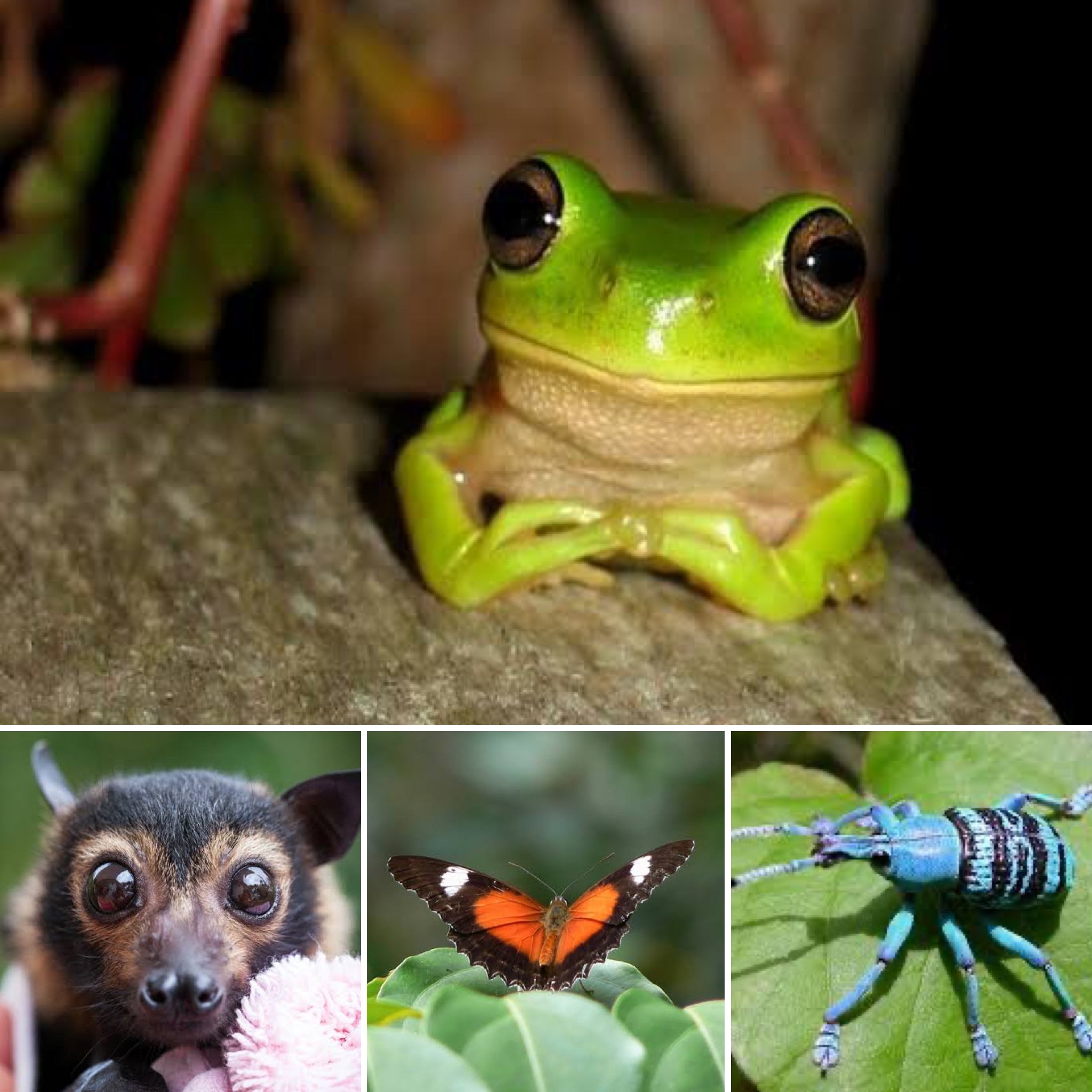
This planting site is in the Lower Daintree rainforest area of Tropical Far North Queensland with a waterway which feeds directly to the Great Barrier Reef. The site where the revegetation work is being conducted is part of a large farm area which was previously cleared for cane and cattle farming; however, the area is very low lying and is not suitable for hooved animal farming. The landowners have chosen to return this area of the property back to authentic rainforest, compete with State Government protection, which has been included to the title deeds of the property ensuring protection for perpetuity.

The land was unsuitable for farmland and due to an overburden of weeds and has also not been of benefit for wildlife as habitat or food resource. But by replacing the weeds with forest, it will now provide both habitat and food.
We are eternally grateful to Fifteen Trees and their sponsors who continue to support our work. Without this ongoing support we cannot continue to do what we do in revegetation, expanding habitat and improving the environment of our unique area and supporting our local wildlife.
Connie Pinson | Partner and Founder | Daintree Life
Numerous bird species have been observed and taking advantage of the revegetation. These species include, but are not limited to: Yellow-bellied Sunbirds, Greater Egrets, Willie wagtails, Rainbow Bee-eaters, multiple species of Kingfishers and Masked Lapwings. Graceful tree frogs and Rocket frogs are regularly sighted within the planting areas. There is lots of evidence of Bandicoot diggings between trees and on the edges. A Water Python has been sighted in the revegetation area. Numerous species of butterflies and dragonflies have been observed within the area. In the future as trees attain additional height and begin flowering and fruiting, the entire area will provide a valuable food resource for Spectacled Flying-foxes which are a federally listed endangered species.
Together, as individuals, we can make significant change. Think of people like Greta Thunberg, who went from a lone figure protesting on the steps of her parliament to the symbolic leader of a worldwide youth climate movement. Think of the social justice marches of the past few years, those rivers of people taking over our streets and calling for change. All individuals. All making a difference.
Never believe that a few caring people can’t change the world. For, indeed, that’s all who ever have.
Margaret Mead | Cultural Anthropologist
We see it very clearly here are Fifteen Trees. We have hundreds of individuals who purchase small numbers of trees, because that’s what they can do right now. But those small numbers add up! Thousands of trees have been planted thanks to small personal gestures of generosity and forward-thinking. First a rustle, then a roar, and finally a forest.
This is the power of acting individually and working collectively. If you think you can’t make an impact, we’re here to tell you that you can. Because it’s never just you. It’s all of us, and we’re facing these challenges together.
Would you like to add to our tree tally for 2025? You can purchase trees here.
Writer – Lou Ridsdale
Lou a green thumb, Earth Lover, big-hearted nature freak, plus a savvy media and horticulture expert, who passionately believe that everyone can lead a more nourishing and sustainable life. Lou founded Food Is Free Inc., a unique grassroots food security platform specialising in food security education. Find Lou here.


